Nobody was evil. So who poisoned the river? Externalities, playable
Eight dye works, none of them wicked. Together they kill the fishers’ catch. Who should pay?
Play Chapter V free ▸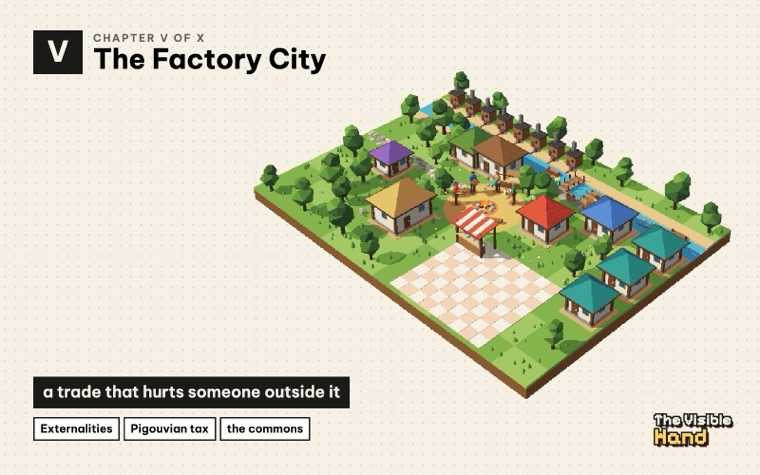
The idea
An externality is a cost (or benefit) of a trade that falls on someone outside it. The dye works and its customers strike a fair bargain, but the fishers downstream pay part of the price. Because nobody is charged for the harm, too much of it happens. Pigou (1920) proposed charging each polluter the harm it does: a Pigouvian tax. Then only the activities worth more than the damage they cause keep going. Coase (1960) asked whether the two sides could simply bargain. Hardin’s tragedy of the commons (1968) is the same logic applied to shared resources.
What you do in the game
Eight dye works upstream, fishers downstream. Nobody is evil, yet the river dies. Players try charging each works for the harm it does. It takes about 5–8 minutes, runs in any browser and needs no account.
Why it matters today
Carbon taxes, congestion charges and fishing quotas are all attempts to put the missing price back.
- Nobody wanted to poison the river. So who is to blame?
- After the charge, which dye works kept running, and why those ones?
- Coase says the two sides could just bargain. Why might that fail here?
Sources the game cites: Pigou (1920); Coase (1960); Samuelson (1954); Hardin (1968). Teaching this? See the lesson plan for Chapter V.